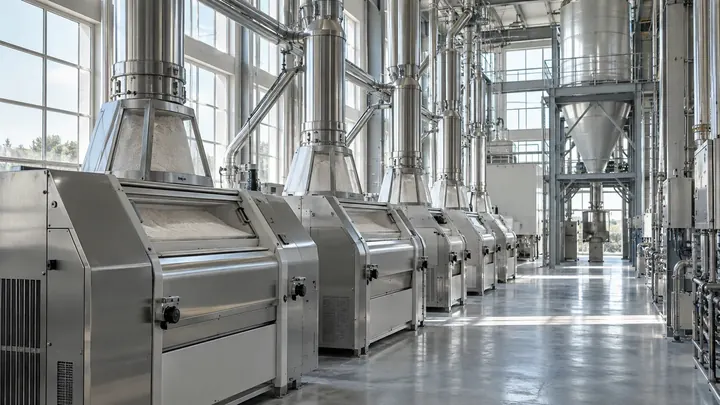
A milling line can be fully installed while its continuing performance depends on relatively modest replacement items. Wear parts require suitable specifications, stock and technical support. Their purchase should be planned around the production programme, rather than begin when a worn component has already interrupted it. The decision connects maintenance spending with the quality and continuity of accepted output.
Identify the service each part supports
The equipment supplier and qualified technical team should establish the relevant inspection and replacement arrangements for the actual line. A generic spare-parts list may include items with very different consequences and lead times. FAO's postharvest engineering resources provide context for the connected stages of grain processing. The owner should identify which component limits an essential stage, what evidence prompts replacement and which records support that assessment. The objective is a serviceable plan, with technical requirements linked to the machine configuration actually delivered.
Procurement should distinguish a part held for one installed configuration from stock that serves several units. That distinction changes the value of pooling spares and helps the owner avoid counting a shared item as simultaneously available to incompatible repair plans.
Compare stockholding with interruption
Consider a hypothetical mill that can obtain an inexpensive part only through an imported shipment. Its unit cost may be small beside the cost of waiting for transport during a committed production period. The stock decision should compare the carrying cost and risk of an unused item with the consequences of delayed restoration. Not every component deserves immediate local stock. Criticality, condition information and a dependable supplier route can support a proportionate choice, avoiding both an empty storeroom and a costly inventory of unrelated catalogue spares.
Keep substitutions controlled
A replacement offered as equivalent needs appropriate technical review before installation. Purchasing should retain identifiers, supplier documentation and the approval record. An apparently suitable component can create uncertainty if nobody can demonstrate which configuration it serves. The contract should also identify warranty implications through the relevant parties rather than rely on informal assurances. Clear records help maintenance staff diagnose later problems and prevent the same unverified substitution being repeated merely because it once arrived quickly during an urgent repair.
Feed experience into the next season
The line's maintenance history should connect operating time, inspection findings, parts used and resulting output issues. A recurring failure may indicate a supply problem, operating condition or a different underlying fault. Those possibilities require different responses. Managers should review the evidence before increasing the permanent spare-parts allowance. A practical plan gives the production team confidence that replacement work has a realistic date and resource requirement, while giving finance a reasoned account of why particular stock is held. It makes the small recurring purchase part of a coherent operating system.