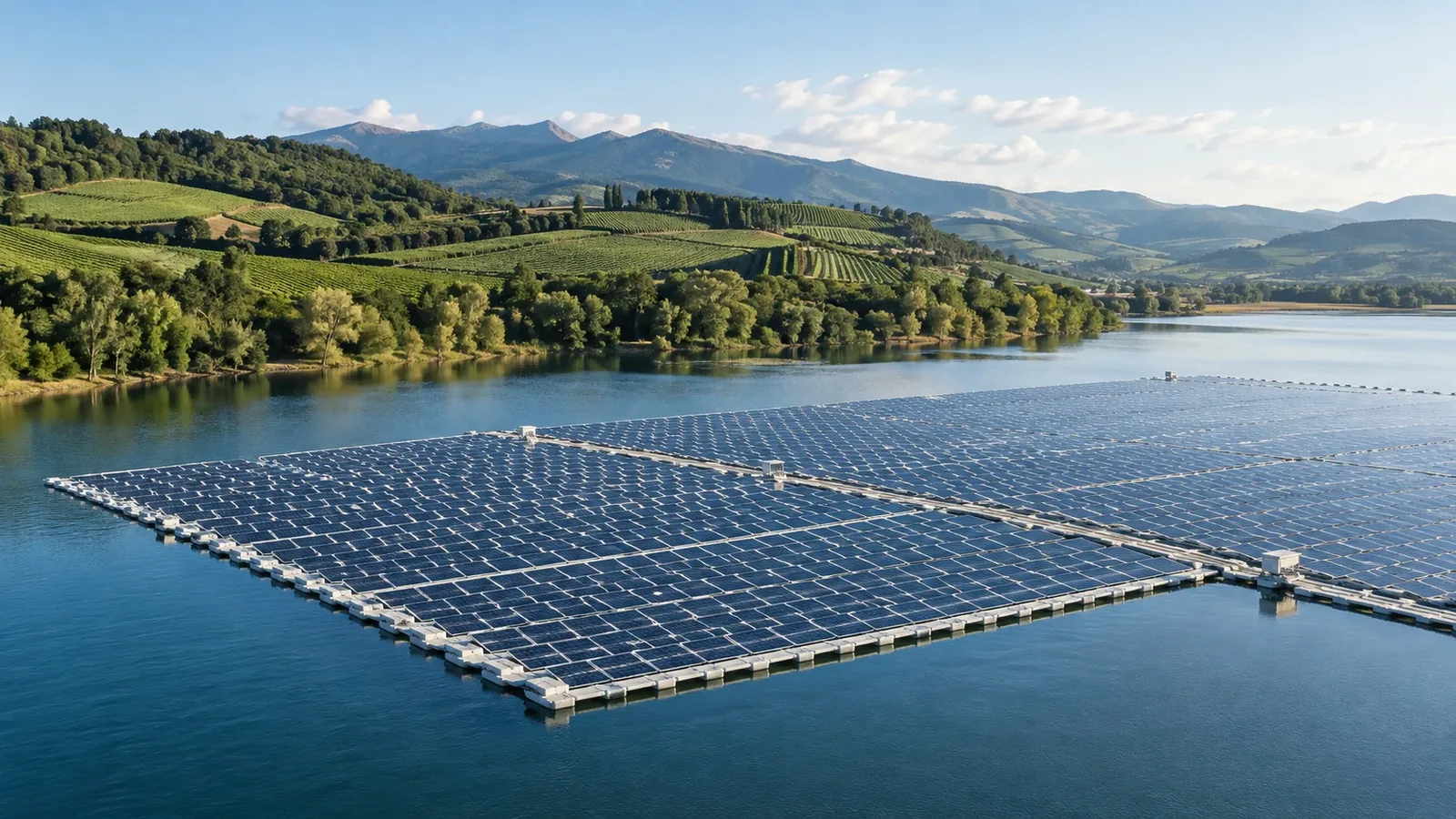
A water surface can look like an uncomplicated place to put a solar array. The decision for its owner is more demanding: can electricity generation coexist with the waterbody’s functions and operating conditions? Floating solar changes the site investigation, maintenance access and stakeholder discussion, even when the electrical objective resembles that of a land-based array.
Understand the waterbody’s working life
The site investigation should describe changing water levels, exposed shorelines, depth, weather and the uses that depend on the water. A reservoir may support irrigation, storage, ecology, recreation or other infrastructure. Its operating rules belong in the energy project’s first design brief.
The World Bank’s floating solar report identifies land constraints as one reason to consider the technology and highlights water quality, mooring and maintenance among its challenges. Those are a useful starting frame, rather than evidence that a particular ALFA location is suitable.
Treat the anchoring system as central engineering
A floating array has to accommodate its physical environment while maintaining its intended position and access. The owner should commission the investigations needed for anchoring and mooring choices, including the relevant changes in water level and conditions at the proposed site. The array layout and shore connection need to be considered together.
An investor can ask which design assumptions have been measured and which remain provisional. A supplier drawing should identify the environment for which it was prepared. A plan developed for a different waterbody needs technical review before it becomes a budget basis.
Plan how people will reach the equipment
Maintenance access deserves a practical demonstration in the design process. Inspection, isolation, component replacement and emergency response may require different arrangements from those at a ground-mounted installation. The owner should understand who can perform the work, how personnel reach the array and what conditions suspend access.
Environmental review should also examine the proposed footprint and its interaction with existing uses. Potential benefits need a site-specific evidence basis; a general statement about reduced evaporation or improved water quality should not be booked as an established project outcome.
Compare complete systems
The investment comparison should include engineering, shore facilities, access, maintenance and the conditions of using the waterbody. A small land requirement does not eliminate other rights, permitting or operational questions. Comparing module prices alone leaves much of the decision outside the model.
ALFA’s whitepaper treats floating solar as a broader theme, without final capacities or locations. The next credible step is consequently a site-screening and feasibility brief. A suitable brief can explain why floating deployment deserves further study, what would make it unacceptable and which measurements are required before procurement or financing claims become concrete.