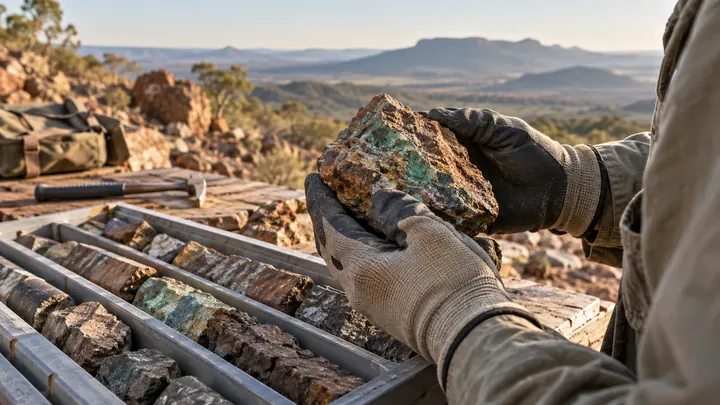
A multi-mineral prospect can create several routes for investigation and several opportunities for a blurred narrative. Srimaan Resources’ Zambia materials describe lithium-bearing pegmatites, tin and associated minerals alongside a separate graphite programme. The owner’s decision is how to sequence technical spending so each commodity earns its place in the development case.
Build a geological question for each workstream
The ALFA summary records a reported licence area of 41.67 square kilometres and work including mapping, geophysics, petrography and multi-phase diamond drilling. It identifies resource-upgrade drilling, pre-feasibility and lithium-caesium-tantalum metallurgy as further steps. Those descriptions should remain attributed to the source edition.
An area figure cannot establish the volume, grade or continuity of a deposit. The exploration plan should identify where each mineral hypothesis comes from, which observations support it and what result would weaken it. A separate graphite programme should retain its own sample history and technical conclusions.
Separate shared infrastructure from shared economics
Access roads, camps, survey data and baseline studies may support several investigations. That does not mean every commodity can share a plant or customer. Mineral processing, waste characteristics and product specifications can create distinct design problems even within a common licence boundary.
A sponsor can prepare two budgets: the common work that improves the site’s overall knowledge, and the commodity-specific work that tests a particular route to market. The split makes it easier to see whether one promising workstream is carrying assumptions from another.
Do not let a by-product balance the model by assertion
An investor should ask when a secondary mineral becomes a saleable co-product in the financial model. Evidence should connect its occurrence, recoverability, product quality and prospective market. Until those links exist, including an optimistic sales line may hide the economics of the principal process.
The JORC Code’s treatment of modifying factors illustrates the breadth of work between geological knowledge and an economically mineable reserve. It provides a vocabulary for asking questions, rather than a certification of this programme or a substitute for project-specific studies.
Sequence work around reversible decisions
A practical first phase may gather data that helps choose among competing processing routes, while preserving material for future testing. The owner can then commission deeper work on the route with the strongest evidence. Spending gates should specify which geological, metallurgical or commercial uncertainty they are meant to resolve.
Environmental approval also needs its own conditions register; the whitepaper notes that Srimaan’s approval is subject to stated conditions. The relevant milestone is compliance with the permissions for the planned work. A compelling critical-minerals theme becomes a credible project only through this combination of distinct technical files, accountable decisions and carefully supported integration.