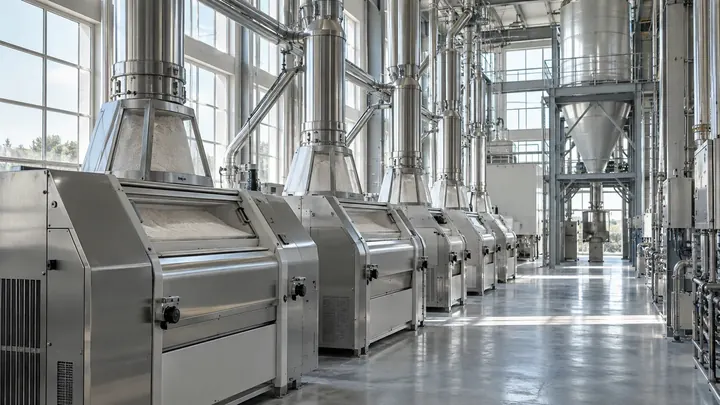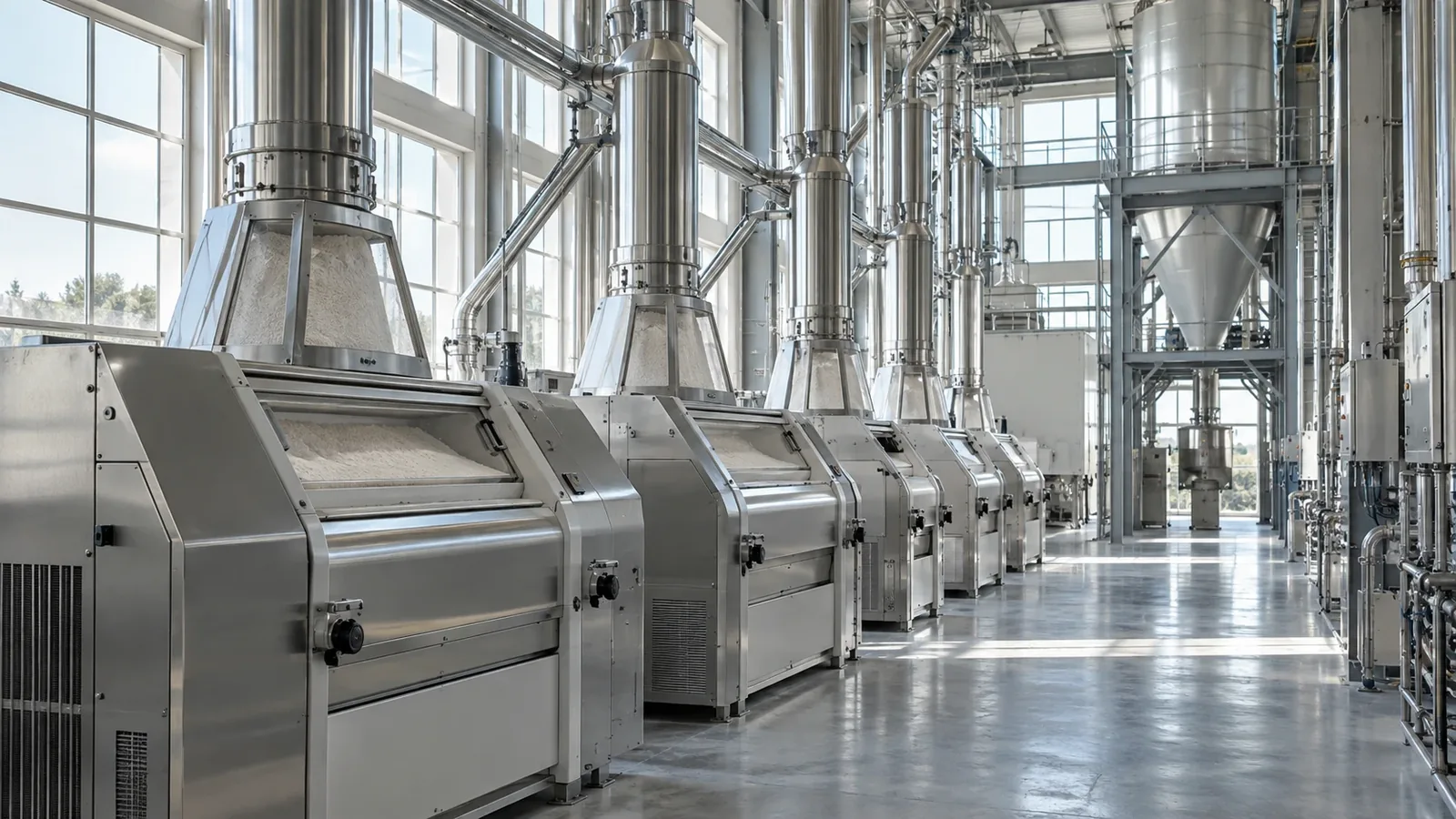
The Maktoum–Sarveshwar rice-processing programme connects Senegal’s agricultural supply with industrial processing and distribution. Its July 2026 project documentation sets out a River Valley operation in the Saint-Louis region, linked to Maktoum Distribution in Dakar. ALFA confirms that the project is documented and agreements are in place. Execution now centres on coordinating crop supply, plant delivery, working capital and the customer requirements that will determine the commercial value of each tonne processed.
The operating model
The planned line takes seven tonnes of paddy per hour. At sixteen hours a day and three hundred days a year, the model reaches 33,600 tonnes of annual input and approximately 20,800 tonnes of white rice. These figures describe the documented design schedule. They do not establish current production, a guaranteed recovery rate or sufficient contracted supply. A diligence team should keep the arithmetic visible and separately identify downtime, crop seasonality and the quality mix needed to deliver the model's output.
Put each counterparty in its proper role
Maktoum’s existing rice trading activity provides the commercial foundation for the processing programme. The July documentation names Sarveshwar Foods Ltd. and identifies HP Handling of Italy for the turnkey processing line. ALFA’s confirmation of agreements moves the discussion to delivery responsibilities: engineering, performance testing, training, financing and treatment of delay. The current agreement register should identify each counterparty’s contracted scope and the relevant acceptance criteria. That gives the project team a common basis for coordinating supplier deliverables, site preparation and the operating handover.
Connect the purchase book to the sales book
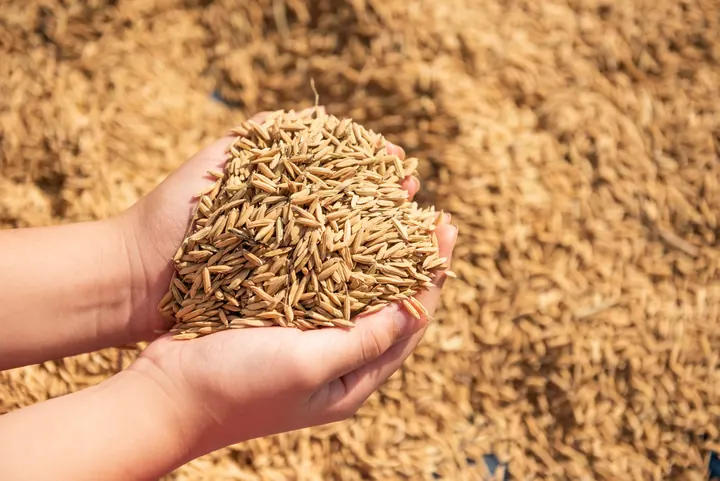
The practical test begins with representative paddy samples and buyer specifications. A mill may produce different grades, broken rice and by-products, each requiring a route to market. The procurement plan should show where acceptable paddy is available, when it arrives and how suppliers are paid. The sales plan should show packaging, credit terms and acceptance procedures. Existing distribution experience can inform those choices, but processing introduces quality, inventory and production risks that a trading business may previously have passed to another operator.
From agreements to commissioning
The documented €7.3 million project budget comprises €5.5 million for plant and turnkey erection and €1.8 million for working capital. Neither amount is identified as money raised by ALFA. Before proceeding, project sponsors need an integrated schedule covering site readiness, utility connections, commissioning stocks and customer qualification. Implementation reporting should pair signed responsibilities with a reconciled cash requirement and a tested operating case. This gives partners a clear account of delivery progress, commissioning readiness and the transition into commercial processing.
The schedule should also identify who carries the cost if equipment is ready before the building, or if the first crop purchases arrive before testing is complete. Assigning those interfaces to named parties would expose gaps that can otherwise survive inside separate supplier budgets and optimistic delivery dates.