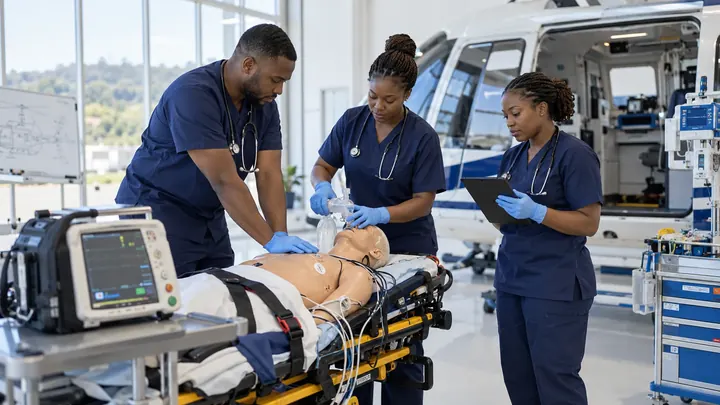
A medical connectivity proposal can feature a capable aircraft and a modern receiving facility while overlooking the systems that keep equipment functioning between them. Oxygen and electricity illustrate the issue. Investors and asset owners should examine the continuity of essential services across the whole pathway, including waiting periods, ground movement and changes to the original destination.
Specify the service before the equipment
The clinical provider should define the needs associated with the intended mission types, and the technical team should translate those needs into an approved equipment and supply plan. This article offers no patient-specific treatment or reserve calculation. Its concern is whether the project has assigned responsibility for producing and validating that plan.
WHO describes oxygen as an essential medicine requiring a whole system to reach patients safely. Procurement, quality, supply management and trained people therefore belong in the assessment alongside the visible equipment.
Examine the energy requirement at each location
WHO identifies reliable electricity as important for medical equipment and many routine and emergency procedures. A project should assess its actual loads and operating conditions rather than assuming a facility's grid connection proves adequate continuity. A transport base, sending facility and receiving institution may each have different energy dependencies.
The diligence record should distinguish the main energy source, the backup arrangement, maintenance responsibility and the evidence used to verify performance. Nameplate capacity alone does not describe how a system behaves during an interruption.
Follow supply through a delayed journey
A representative scenario should extend beyond the planned timetable. Ask how the responsible teams assess a departure delay, prolonged ground movement or a changed destination. Their approved procedures should define reassessment and escalation rather than relying on informal improvisation.
For asset owners, compatibility is a commercial as well as a technical issue. Equipment integration and supply arrangements can constrain the missions an aircraft supports. Changes should pass through the responsible clinical and aviation processes before they become part of the advertised service.
Fund the operating obligation
Maintenance, consumables, testing, replenishment and training create recurring costs. The proposal should show which party budgets and pays for each obligation, and how faults remove equipment from service. Donated or newly purchased equipment can still create a funding gap if nobody owns its continuing support.
WHO's facility electrification work similarly emphasises energy requirements, suitable solutions, institutional capacity and maintenance. The investment question is whether a dependable service has been funded across its life, rather than whether a purchase has been completed.
Use evidence suited to the development stage
ALFA’s healthcare programme documentation provides the framework for a service-specific readiness review. Its future readiness review should therefore seek provider-approved equipment plans, maintenance arrangements and tested continuity procedures before reporting operating capability. The same logic would apply to any future link with an energy programme: shared ownership or branding would not demonstrate that power and clinical supply requirements have been met at a specific facility.