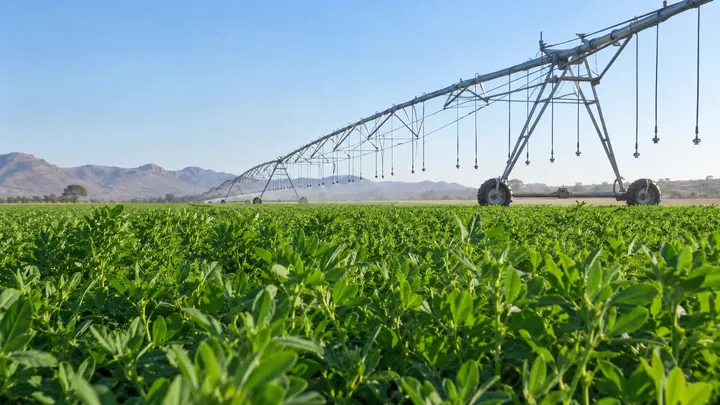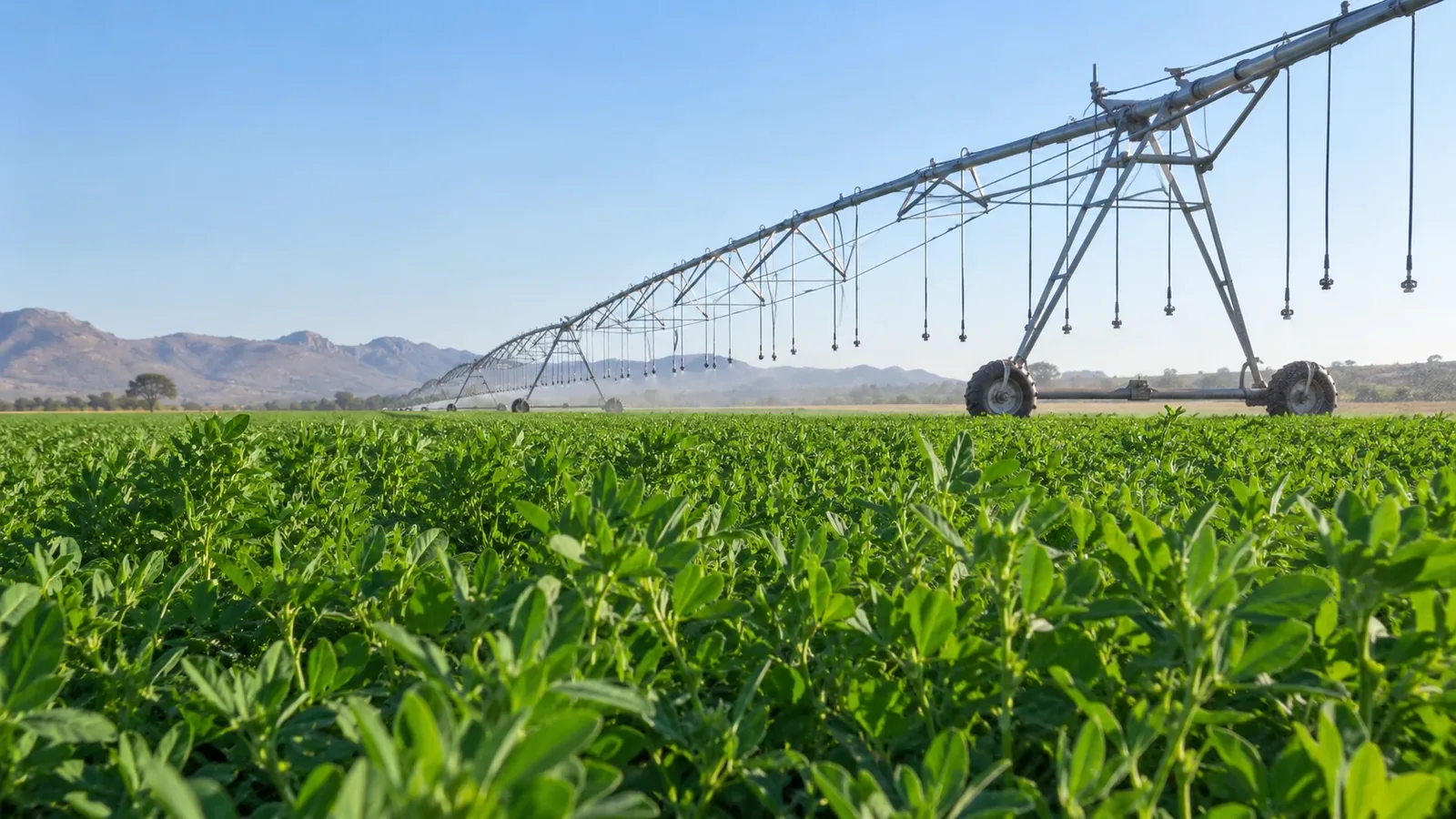
A river or dam on a project map establishes a geographical relationship. A commercial irrigation case needs a quantified route from an authorised source to crop demand throughout the growing calendar. For the Mwenezi programme, the published reference to the Mwenezi River and Manyuchi Dam provides context. It does not by itself establish every right, engineering requirement or operating condition needed for the proposed irrigated area.
Start with the crop calendar
FAO explains irrigation need as crop water demand less effective rainfall, assessed over the growing season. Its guidance also identifies peak demand as important for scheme design. A project's working model should therefore show monthly requirements and the periods when rainfall is unlikely to cover them. The inputs should be local and documented. A regional average can help frame early work, but it should not quietly become a verified water budget for a specific field, crop variety and planting programme.
Separate availability from delivery
Water at a source and water delivered to a root zone are different quantities. The engineering review should identify abstraction conditions, conveyance, pumping, storage and field application. Each link needs a capacity, operating assumption and responsible party. The model should also show the energy required to provide the intended service. Where several crop blocks depend on the same pump or power connection, their requirements must be considered together. An apparent surplus on an annual basis can coexist with a constraint during a short critical period.
Metering and operating records should be planned during design, so later teams can compare abstraction, distribution and field application. The objective is an intelligible account of where water and pumping time go. Installing a system without a practical way to measure its operation would make future diagnosis and reporting unnecessarily difficult.
Make a difficult season operationally concrete
A useful stress case explains what management does when the planned supply is reduced or interrupted. The choices may include a different planting schedule, fewer developed blocks or a crop programme revised before commitments are made. Those actions need lead times and decision rights. It is more useful to know which block would be deferred than to add a generic drought percentage to a spreadsheet. The team should also distinguish a temporary equipment outage from a longer shortage, because they require different operating responses.
Approve hectares in step with evidence
An irrigation development can progress through surveyed land, confirmed rights, completed engineering, installed infrastructure and tested delivery. Each milestone should have a clear definition and supporting document. In Mwenezi's published design, 2,200 hectares of planned irrigation and forty-five centre pivots remain project figures, rather than reported commercial performance. A board reviewing the next phase should see whether the water system can serve that phase under the stated conditions. That gives the acreage decision a physical basis and creates a record against which commissioning and later seasonal performance can be assessed.