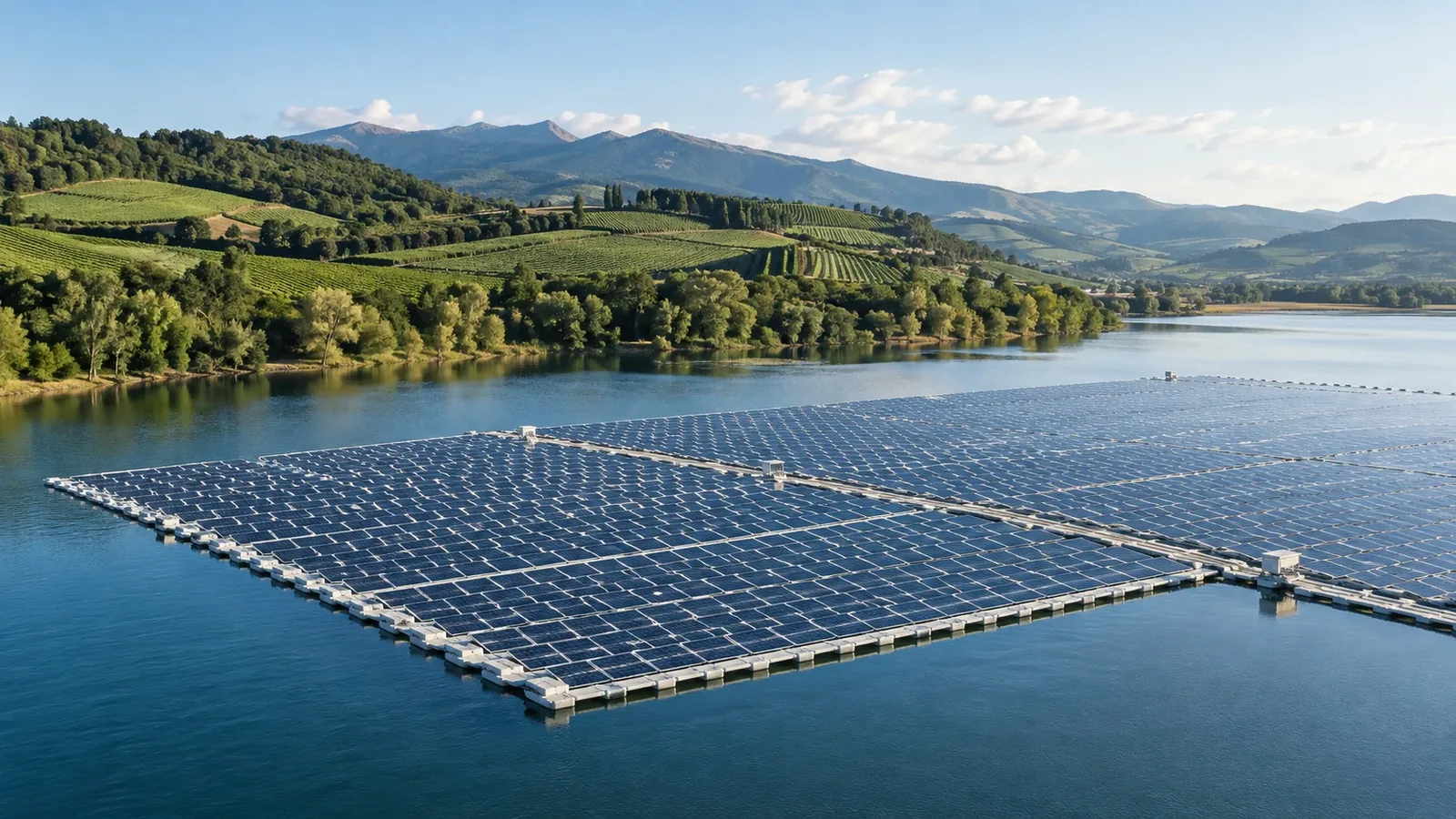
Floating panels can attract most of the attention while the route carrying their electricity ashore receives less scrutiny. That interface joins moving and fixed infrastructure, often across an area used by other people or equipment. An owner should examine how the design accommodates its intended conditions and how inspection, access and restoration responsibilities continue beyond construction.
Define the interface as an asset
The technical file should identify the relevant cable route, shore transition and connections, with qualified design evidence for the intended operating conditions. World Bank floating-solar material recognises the complexity of maintaining electrical components on water. Its general discussion does not validate a particular installation. In a hypothetical reservoir project, different contractors could each complete their own package while leaving responsibility for the shore transition unclear. The project should treat that boundary as a defined interface with a named owner, rather than an incidental detail between otherwise complete contracts.
Review movement and access together
The design and operating plan should reflect the substantiated water-level and access conditions, with competent specialists determining technical requirements. Inspection needs may change when the shoreline moves or access routes become unavailable. A visit that is straightforward under one condition may require different resources later. The owner should ask how the team reaches, assesses and restores the interface within its approved procedures. Avoid importing a standard maintenance assumption from a land-based array without checking the additional access and coordination the water setting actually requires.
Keep responsibilities continuous
Specify who inspects the interface, maintains records and coordinates a response when another activity affects the route. The reservoir operator, solar contractor and electricity operator may hold different responsibilities. Their agreements should make communication usable during ordinary work and an interruption. DOE's PV maintenance guidance supports defined inspection and corrective processes; the floating application requires those processes to fit the site. The commercial review should include the resources needed to investigate a fault without presuming that every outage can be resolved by the contractor responsible for the nearest visible component.
Retain an adaptable handover record
As-built information should remain accessible to the people authorised to use it, with changes recorded when routes, equipment or operating conditions are altered. Identify which modifications require technical reassessment rather than routine maintenance approval. An interface review also helps future removal or replacement planning, because the connection must eventually be handled as well as the floating array. Investors gain a clearer basis for assessing continuity when the project explains this entire boundary, including its limits, rather than reporting electrical completion solely through energisation of the first set of panels. Agreements should preserve the records needed by replacement contractors, rather than making continuity depend on access to one supplier’s original project team.