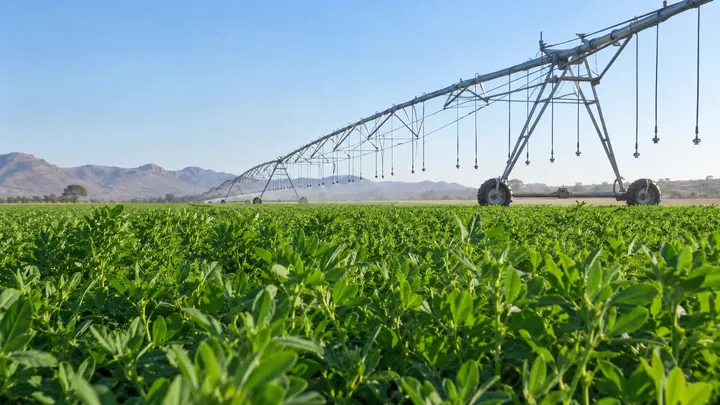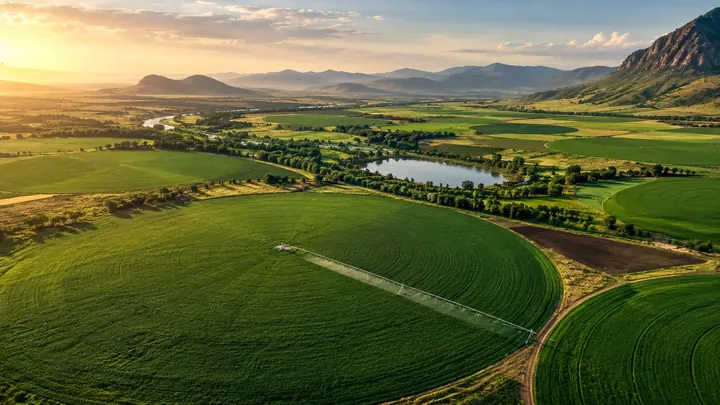
A farm weather station can generate a continuous stream of numbers while leaving managers uncertain whether they describe the crop's actual conditions. The investment decision concerns observation quality and practical use, not just hardware. Before buying another sensor, the owner should identify which field decisions need local evidence and how the information will be checked, interpreted and maintained.
Choose the purpose before the location
Weather observations may support irrigation planning, task scheduling or interpretation of crop performance. Different purposes can require different measurements and attention to where they are taken. WMO's agricultural meteorology guide provides specialist context for observations and their use. A hypothetical farm could place a station beside an office for convenience, then use it to represent distant blocks with different exposure. The problem is not necessarily inaccurate equipment; it may be an unsuitable assumption about what the observation represents and which decisions it can reasonably support.
Budget the care behind the reading
Assign installation review, inspection, maintenance and responsibility for investigating questionable values. A missing or implausible reading should be visible rather than silently replaced by a convenient default. Record instrument changes so later comparisons remain interpretable. Equipment purchase is only the beginning of a continuing observation service. The commercial assessment should include the staff and support needed to keep that service usable, particularly where a supplier provides a dashboard but the farm remains responsible for the physical condition and placement of instruments.
Link information with an authorised action
Identify who receives the observations and which decisions they inform. Irrigation or crop-management changes still require qualified interpretation and the relevant operating procedures. FAO's water-needs material explains why weather matters to crop-water assessment, but a live display is not an automatic instruction. A hypothetical supervisor may need a clear route for escalating conflicting field observations rather than choosing whichever reading supports an existing schedule. The information system should help managers recognise uncertainty and request review, instead of turning every available number into apparent precision.
Preserve the observation history
Retain original records, quality notes and changes in siting or instrumentation. The history can help explain differences between seasons, provided the team understands its limits. Compare the value of another station with better upkeep or interpretation of existing observations. More sensors can be justified where they resolve a meaningful spatial gap, but count alone is a poor performance measure. The farm should judge the investment by whether reliable information reaches a defined decision in time, with enough context for a later reviewer to understand why the team acted as it did. A dashboard export should retain quality flags, since removing them can make an incomplete observation history appear more dependable than the original record.