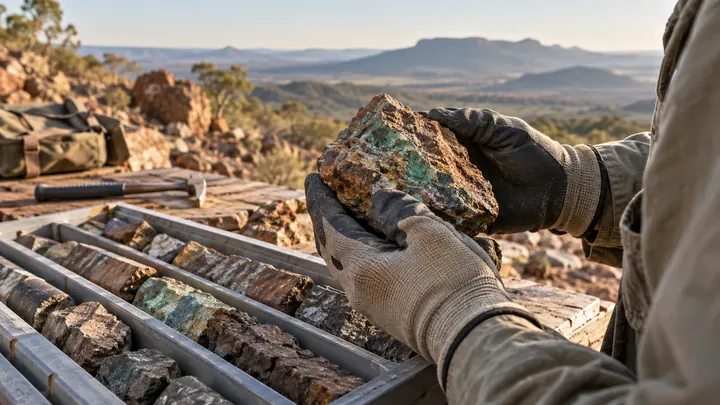
A mining presentation may contain attractive samples, a conceptual tonnage and a processing illustration on adjacent pages. A reader’s decision is whether those pieces support the same level of confidence. The distinction between exploration results, mineral resources and ore reserves provides a practical way to examine the evidence without treating every geological number as mineable material.
Start with the statement being made
An exploration result is evidence gathered during investigation. Its significance depends on context: location, sampling method, geological interpretation and analytical quality. A reader should ask what the observation represents before asking what it might be worth. The same number can carry very different meaning in a selected surface sample and a documented interval.
ALFA’s mining profiles intentionally preserve these limits. Kamiyobo’s summary does not establish a resource or reserve, Shangani requires confirmatory work, and Avani’s source estimates need reconciliation. The stage descriptions should travel with any figures drawn from those profiles.
Use the reporting framework accurately
The 2012 JORC Code distinguishes geological confidence from the technical and economic considerations needed for an ore reserve. Its modifying factors include mining, processing, infrastructure, economic, legal, environmental and social matters. A reported reserve therefore represents a broader evaluated case than the observation that mineralisation occurs.
This distinction is a reading aid, rather than a statement that JORC governs every project or that any ALFA profile has achieved reporting compliance. The applicable framework, qualified author, report date and supporting documentation must be identified for the actual statement under review.
Examine the assumptions that change the number
A reader should request the basis for boundaries, density, sampling support and geological continuity, together with the assumptions used to consider eventual extraction. Technical review should explain important uncertainties and why the chosen approach is appropriate. A rounded headline tonnage is too compressed to answer those questions.
For a project owner, version control is a practical protection. The source dataset, model, assumptions and report need a shared effective date. Combining a new grade statement with an old cost estimate can produce a presentation that no technical author actually assessed.
Choose the next decision rather than a premature valuation
An investor can sort the file into observations, interpreted quantities and evaluated operating assumptions. Gaps then become specific diligence requests. If the evidence supports an exploration target, the next decision concerns a test programme. If a development case is claimed, the relevant technical and commercial studies need to be available.
Owners also benefit from preserving uncertainty in public language. A carefully bounded statement remains useful when results evolve. Multiplying an unverified quantity by a spot price skips recovery, costs, timing and rights, and cannot establish project value. A good report helps the reader understand the work remaining before those questions can be addressed.